In 1898, in Kenya, 2 lions brought the construction of a railway to a halt. The story of the man-eaters of Tsavo has inspired books and films, and the number of victims kept growing over the years. So, legend or reality? At The Wild Agency, we tell you what really happened, and what scientists have discovered since.
Tsavo lies in south-eastern Kenya, halfway between Nairobi and Mombasa, on the Indian Ocean coast. Today it is one of the largest wilderness areas in East Africa, divided between 2 national parks: Tsavo East and Tsavo West.
The story is true. It is the number of victims that was exaggerated.
What happened in Tsavo in 1898?
At the end of the 19th century, the British were building the Uganda Railway, meant to link Mombasa, on the coast, to Lake Victoria. In March 1898, construction reached the Tsavo River, where a bridge had to be built. Thousands of workers were there, most of them from India.
2 lions attacking at night
For months, 2 lions entered the workers' tents at night and dragged them away. Thorn fences, fires and guards were not enough. The fear was such that many workers fled, and construction stopped for a time.
Patterson, the engineer turned hunter
John Henry Patterson, the British engineer in charge of the bridge, spent nights lying in wait for the lions. He shot the 1st lion on 9 December 1898, and the other 3 weeks later, on 29 December. Work resumed, and the bridge was completed.
How many people did the Tsavo lions really kill?
This is where the legend begins. In 1907, Patterson published a book, "The Man-Eaters of Tsavo", which became a great success. In it, he speaks of 135 victims. The railway company officially counted 28.
| Source | Number of victims |
|---|---|
| Patterson's book (1907) | 135 |
| The Uganda Railway company | 28 |
| The 2009 scientific study | Around 35 |
In 2009, American researchers analysed the bones and hair of the 2 lions kept in Chicago. What an animal eats leaves a chemical trace in its body. Their conclusion: over their last 9 months, the 2 lions had eaten around 35 people, one about ten, the other about 24.
That figure is still an estimate. It does not count people who were injured, or those killed without being eaten. But it shows that the book's 135 victims were probably inflated, perhaps to make a better story.
Why did these lions eat people?
Lions do not hunt humans by nature. Researchers put forward several explanations, which probably all played a part.
A broken tooth
One of the 2 lions had a broken canine and severe dental problems. Hunting a buffalo or a zebra then becomes difficult and painful. A human, at night, is a much easier prey.
Less game
In the late 1890s, a severe epidemic, rinderpest, killed a large share of the buffalo and cattle in East Africa. The lions therefore had less to eat.
Easy, plentiful prey
Tsavo lay on an old caravan route, and thousands of workers slept in tents in the middle of the lions' territory. Once the habit was formed, they kept going.
What DNA revealed in 2024
In 2024, a new study analysed hairs still stuck in the lions' broken teeth. It found human DNA, but also that of giraffe, zebra, oryx, waterbuck and wildebeest. So the lions did not only eat people. The study also confirms that they were probably brothers.
Are the Tsavo lions dangerous today?
No, not for visitors. On safari, you watch the lions from the vehicle, with a guide who knows their behaviour. Attacks like those of 1898 have remained exceptional, and were linked to very specific circumstances.
Maneless lions
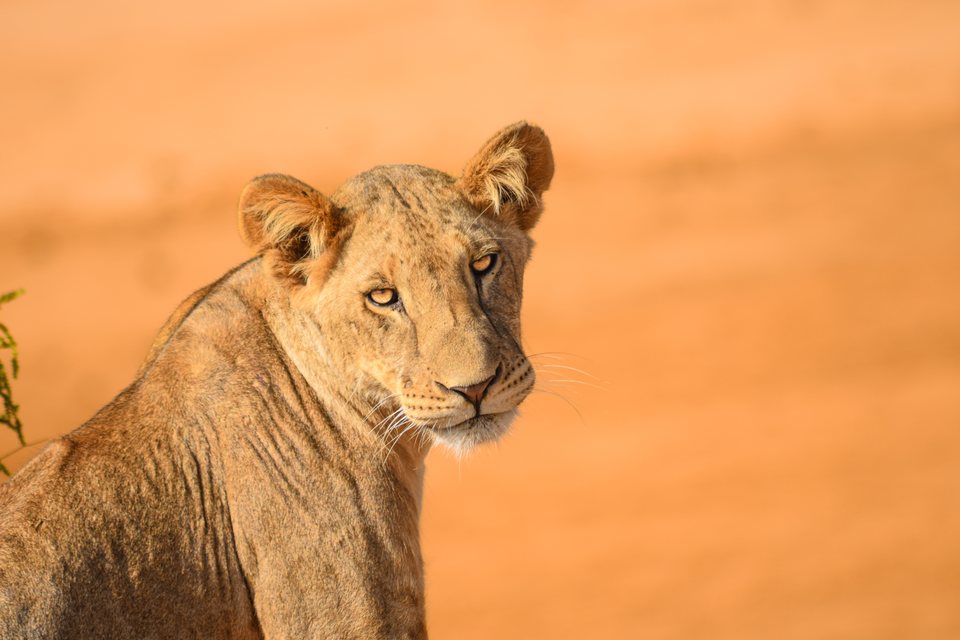
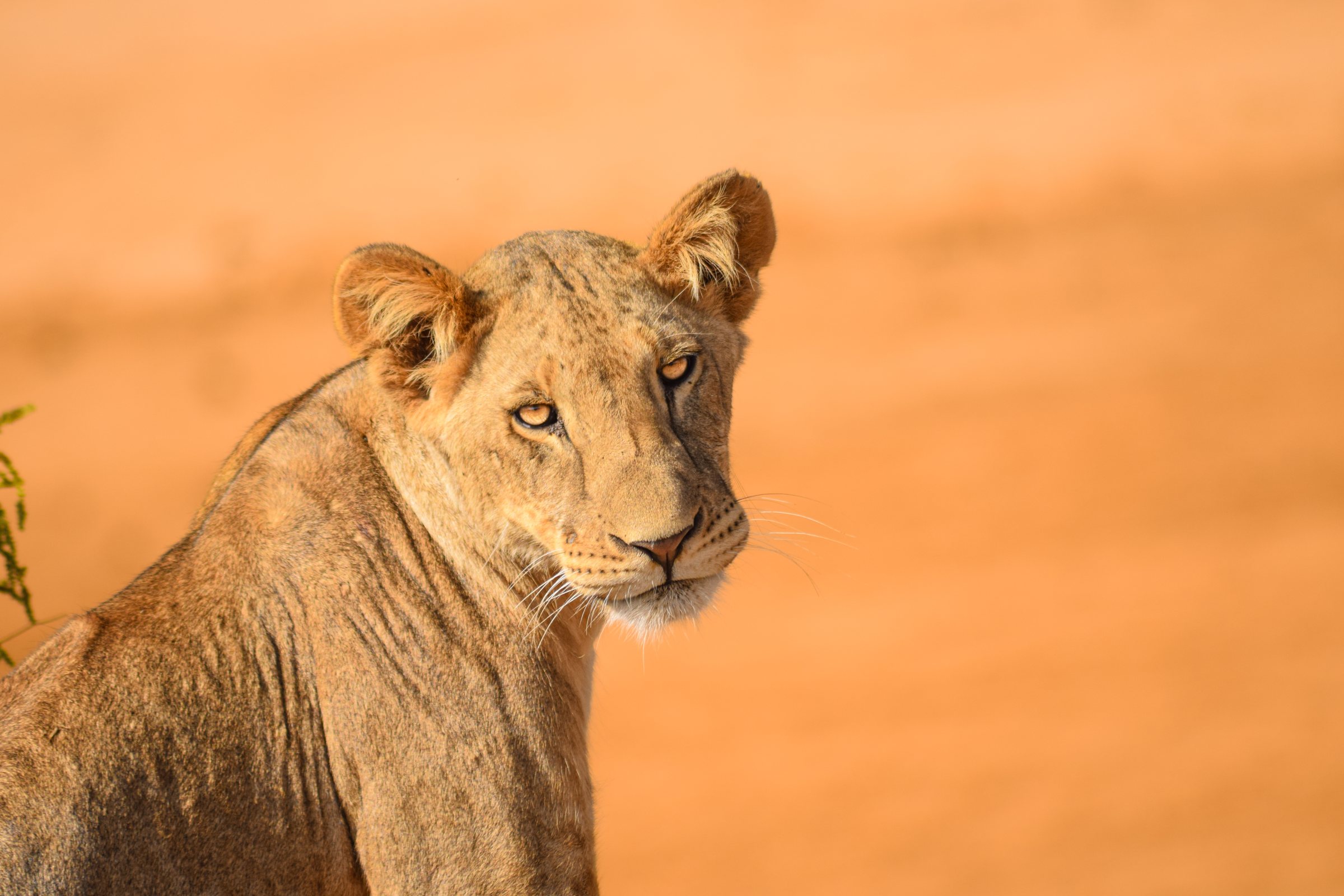
The 2 man-eaters had no mane, and this is still often the case with Tsavo males: their manes are short, or missing altogether. The heat and the thorny vegetation of the region may explain it. Seeing one of these lions means seeing an animal unique in Kenya.
What can you see in Tsavo today?
Tsavo East and Tsavo West are separated by the road and railway between Nairobi and Mombasa. Together, they cover more than 20,000 km².
Tsavo East, land of the red elephants
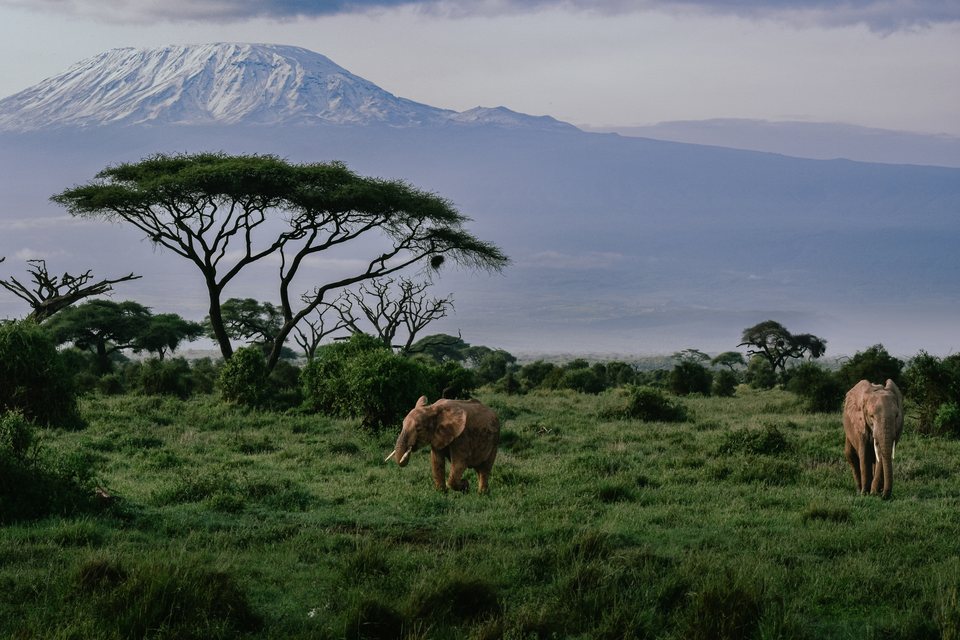
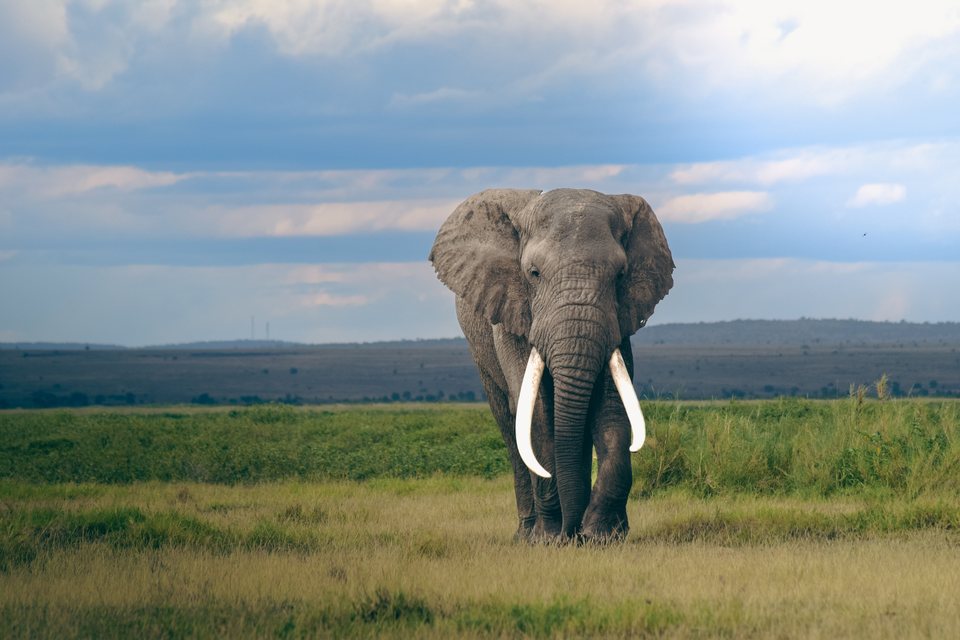
Vast plains, the Galana River, Lugard Falls: Tsavo East is known for its elephants covered in red earth, which roll in the dust to protect themselves from the sun. With more than 12,000 elephants, greater Tsavo is home to Kenya's largest elephant population.
Tsavo West, between volcanoes and springs
Hillier, Tsavo West hides Mzima Springs, where you can watch hippos and crocodiles in crystal-clear water, black lava flows and a rhino sanctuary.
 Related readingKenya's parks: more than 50 protected areasRead the article
The story of the Tsavo lions is very real, even if the legend grew over time. Today, there is nothing frightening about Tsavo: it is a wild territory, ideal for a safari away from the classic circuits. The Wild Agency takes you there at your own pace, to experience Kenya's history and nature differently.
Frequently asked questions about the Tsavo lions
Did the man-eaters of Tsavo really exist?
Yes. In 1898, 2 lions attacked Uganda Railway workers by the Tsavo River, in Kenya.
How many people did they kill?
Around 35 according to a 2009 scientific study, 28 according to the railway company, and 135 according to Patterson's book.
Where are the Tsavo lions today?
The 2 lions, mounted, have been on display at the Field Museum in Chicago, in the United States, since the 1920s.
Which film tells the story of the Tsavo lions?
"The Ghost and the Darkness", released in 1996, starring Val Kilmer and Michael Douglas. The film takes many liberties with history.
Does The Wild Agency organise safaris in Tsavo?
Yes. The Wild Agency offers Tsavo East and Tsavo West, on their own or with Amboseli and the Kenyan coast, at your own pace.